Dr. Melissa Hogan
March 10, 2026

For many districts, ESSA evidence tiers have become shorthand for trust.
A Tier I or Tier II label signals safety. A Tier III study feels “good enough.” Once a product clears the minimum bar, the conversation often moves on.
But evidence is not static. And treating ESSA tiers as a finish line creates a risk most districts never see coming.
That risk is Evidence Debt.
ESSA tiers were designed to encourage the use of research-based interventions. They were never intended to be a permanent guarantee of effectiveness across contexts, cohorts, or time.
Yet in practice, ESSA is often treated as binary:
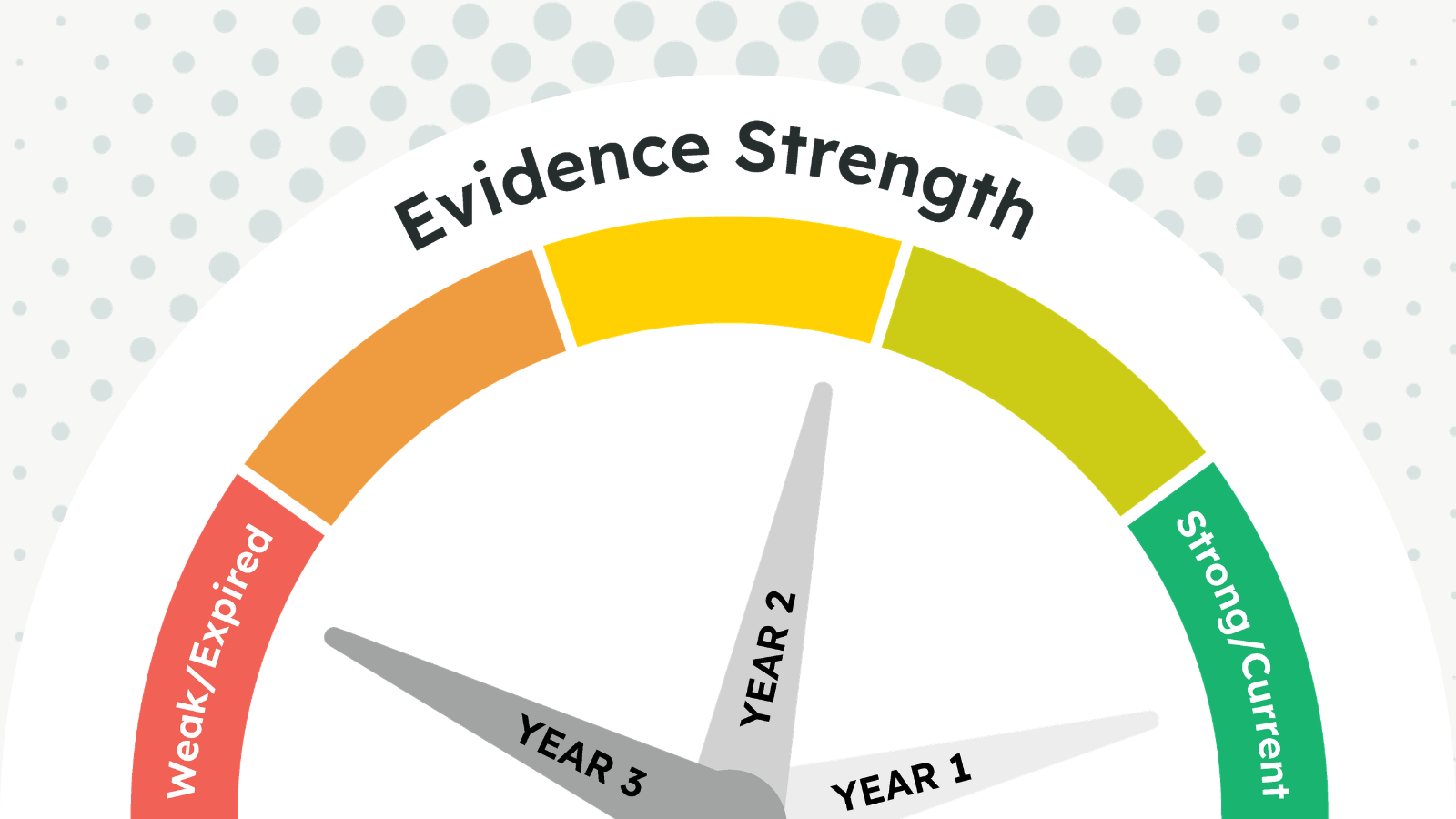
This framing ignores a critical truth: evidence degrades when it is not continuously validated against real-world implementation.
What matters is not whether a tool once met an evidence standard, but whether it continues to produce meaningful outcomes under the conditions districts actually operate in.
This is how evidence quietly stops protecting districts.
Evidence Debt is the cumulative risk districts take on when they rely on weak, outdated, or non-generalizable evidence to guide instructional decisions.
It accumulates when:
Like technical debt in software, Evidence Debt doesn’t cause immediate failure. It slows systems down, obscures root causes, and makes course correction harder over time, often without districts realizing why.
And importantly: districts can accumulate Evidence Debt even when they act in good faith.
Evidence Debt rarely shows up in year one.
Early adoption often includes motivated implementers, novelty effects, and heightened attention, which are conditions that can produce encouraging results even without strong evidence.
But as tools scale:
Without ongoing validation, districts are left assuming impact continues, until results plateau or regress.
By the time the problem becomes visible, the cost is no longer theoretical. It shows up as:
This is Evidence Debt coming due.
ESSA tiers answer an important question:
Has this intervention ever been shown to work under certain conditions?
They do not answer:
When ESSA is treated as sufficient rather than foundational, districts unknowingly accept Evidence Debt, assuming credibility where ongoing proof is required.
Avoiding Evidence Debt requires a shift in mindset.
Evidence must be treated as:
This means revisiting impact claims as implementation matures, usage patterns evolve, and student populations change. It means demanding transparency not just at adoption, but at renewal.
As budgets tighten and scrutiny increases, districts can no longer afford decisions based on expired or superficial evidence.
Every renewal without validation compounds risk.
Every adoption without clarity about the conditions for success increases uncertainty.
Evidence Debt doesn’t just affect procurement.
It affects students.
The future of EdTech impact will not be defined by who cites the right study. It will be defined by who can continuously demonstrate that learning gains are real, equitable, and sustained.
ESSA tiers can open the door. But only ongoing evidence can keep districts from accumulating debt they didn’t know they were taking on.
Treat evidence as something to be re-validated at renewal, not just adoption.
Build a renewal checklist that asks whether impact still holds at scale for your students, under current conditions, before automatically re-committing.
Next up: The Impact Half-Life: Why Most EdTech “Results” Expire Before Renewal
Avoiding Evidence Debt requires more than stronger studies. It requires impact that endures. Post 5 examines why early gains are often mistaken for lasting success, and why durability is the final test of real learning impact.
For definitions and key terms used throughout this series, see the Impact Reality Series Glossary of Terms.