

Atlas Impact

NYC District 11 was the first district to adopt Atlas. As teachers implemented a new curriculum, Atlas helped absorb the planning, grading, and instructional tasks that often consume teacher time.
The result was not simply more technology usage. Teachers were able to spend more time focused on students and instruction. The strongest evidence of that shift can be seen in classrooms where Atlas became part of the daily learning cycle.
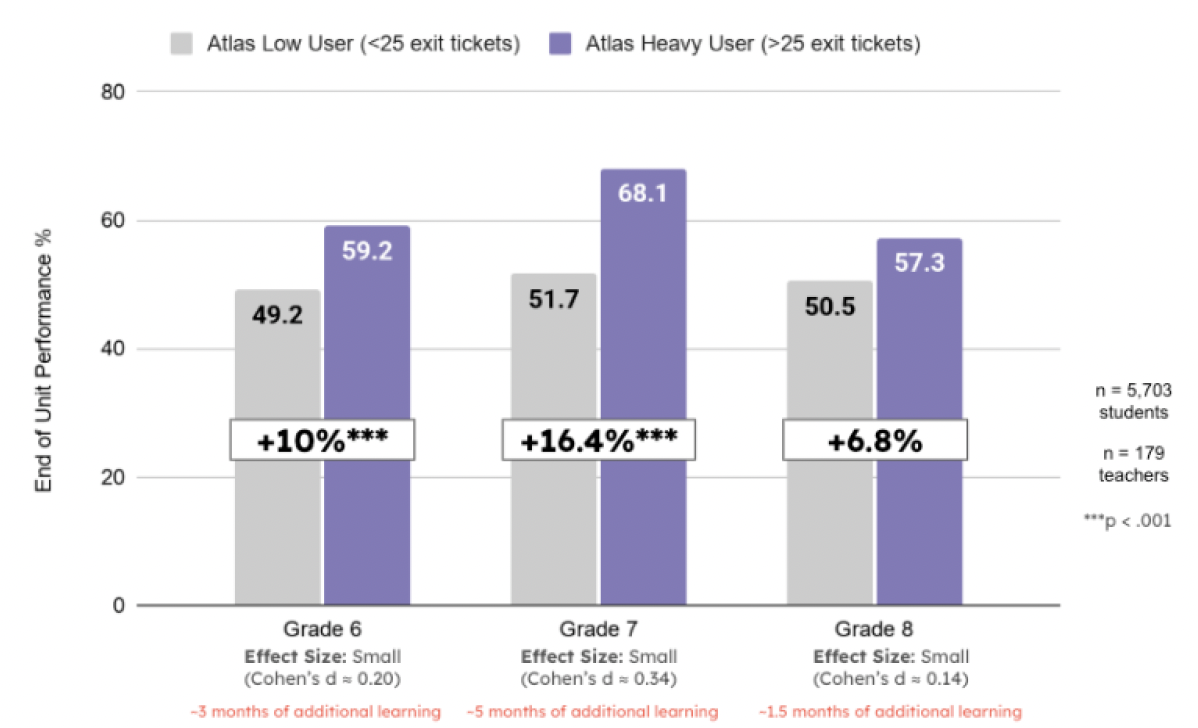
Across all grade levels, students in classrooms with consistent Atlas exit ticket usage achieved stronger End-of-Unit assessment results than their peers. The largest impact appeared in Grade 7, where students in Atlas-heavy classrooms (>25+ exit tickets) scored 16.4% higher than students in low-usage classrooms (<25 exit tickets), equivalent to approximately five additional months of learning.
Atlas was not being used as an add-on. It became part of how teachers monitored learning, identified misconceptions, and adjusted instruction in real time.
Atlas Users Consistently Outperformed Comparable Peers
To better understand the impact of Atlas, student outcomes were compared against a demographically and academically comparable district using Kiddom without Atlas. Atlas users consistently achieved stronger end-of-unit assessment results.
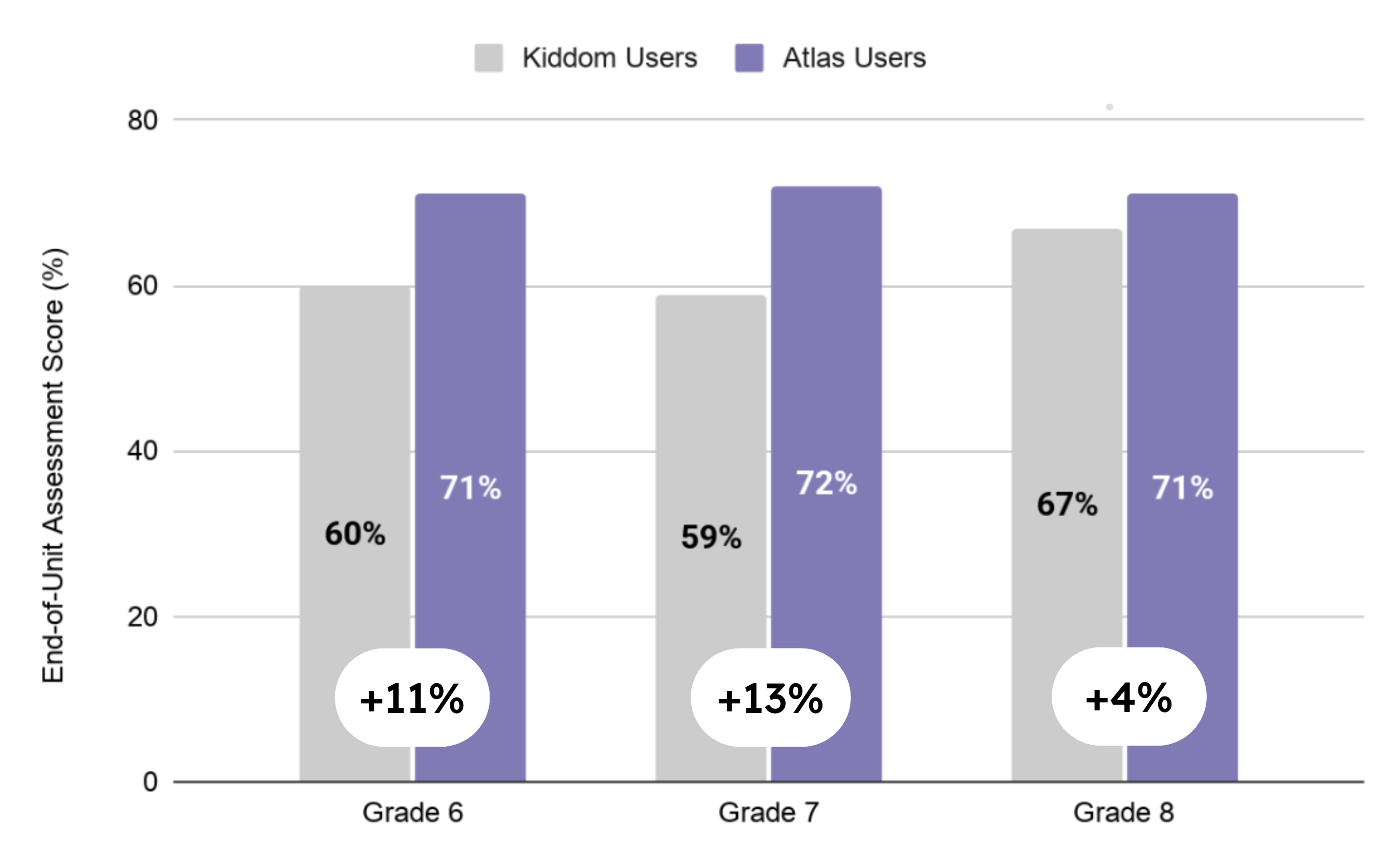
The curriculum was the same. The difference was instructional support. Atlas reduced the operational burden on teachers while helping them respond to student learning faster and more consistently. The result was stronger performance across every grade level evaluated.
The Results Were Driven By Changes In Teaching Practice
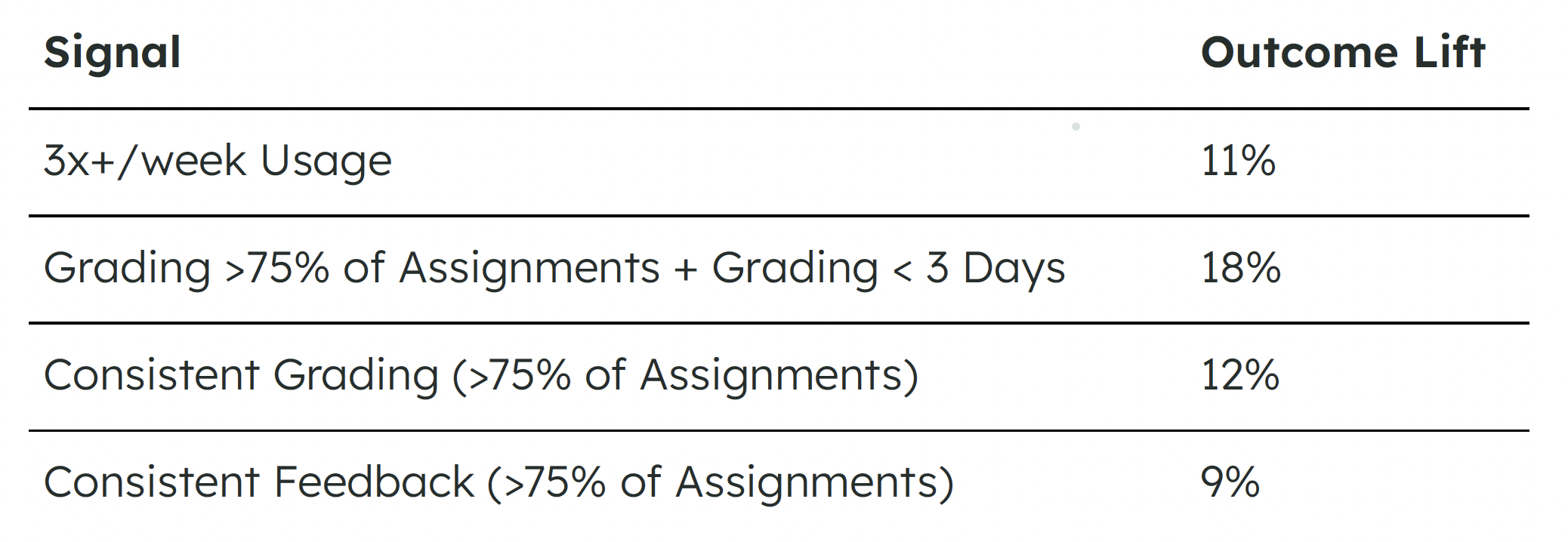
As Atlas became embedded into instruction, several statistically significant impact signals emerged. The pattern was remarkably consistent. When Atlas handled more of the administrative work, teachers were able to focus more attention on students. Those classrooms produced stronger outcomes.
Why This Matters
Atlas reduced the work around instruction so teachers could spend more time responding to student needs, providing feedback, and driving learning forward. The result was stronger instructional practices, higher student achievement, and outcomes that consistently exceeded comparable implementations.
Success stories