

NYC District 7 Impact

When Instructional Behaviors Work Together, Student Outcomes in ELA Accelerate in NYC District 7 with Kiddom
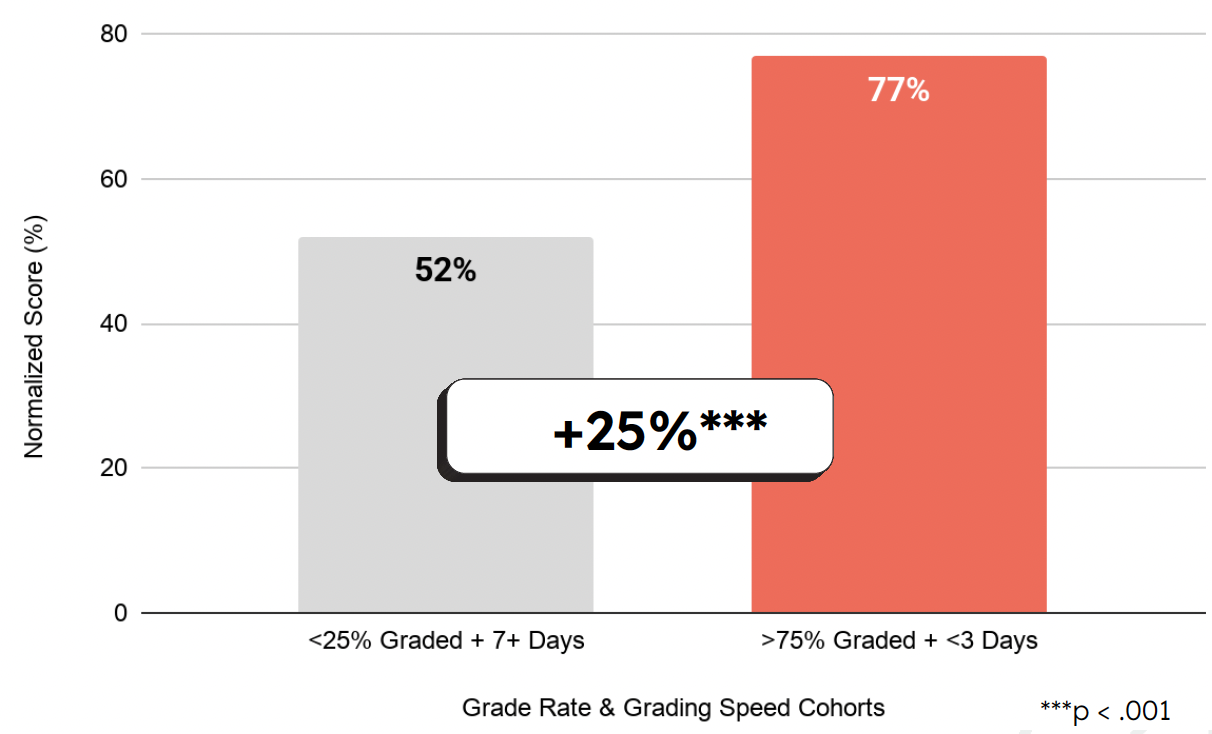
Students taught by teachers who graded more assignments and returned grades within three days outperformed peers by 25%.
The Signal
At Kiddom, we believe the most valuable evidence comes from understanding which instructional practices are most closely associated with student success.
In NYC District 7, a clear pattern emerged: student outcomes were strongest when teachers combined consistent engagement with student work and rapid instructional response. Teachers who graded more than 75% of assignments and returned grades within three days saw student performance that was 25% higher than peers who graded fewer than 25% of assignments and took seven or more days to return results.
What We Are Seeing In District 7
The District 7 findings suggest that no single educator action is driving outcomes alone. Rather, the strongest student performance emerged when multiple instructional behaviors occurred together.
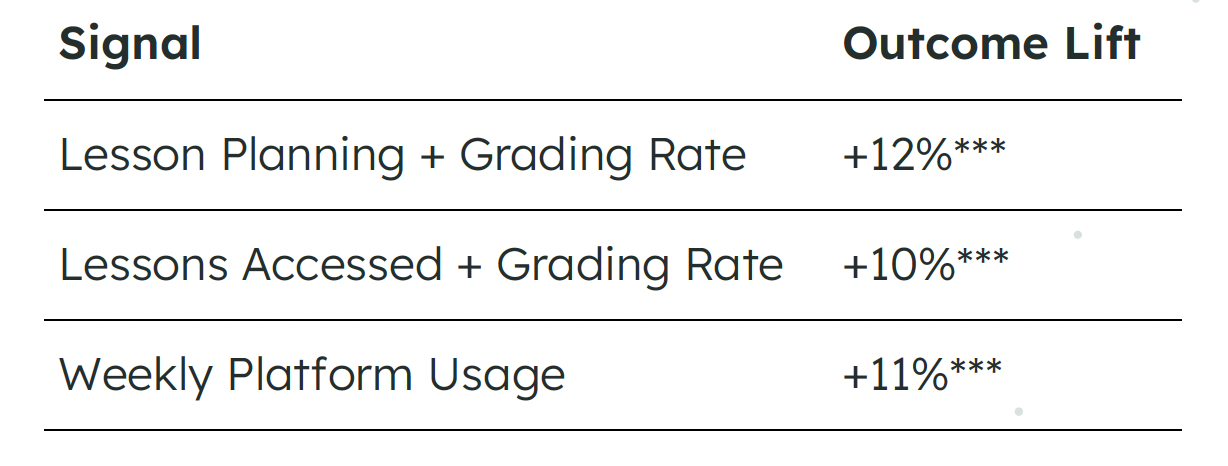
Students consistently performed better when teachers regularly planned lessons, frequently accessed instructional materials, actively used the platform, and maintained high grading rates. Across analyses, these combinations were associated with performance increases ranging from 10 to 12%. This pattern suggests that frequent grading creates more opportunities to monitor learning, identify misconceptions, and respond with timely instructional support. The finding reinforces a simple but important principle: instructional information creates the greatest value when it reaches teachers while there is still time to act on it.
The Power of Consistent and Timely Grading
Several implementation patterns emerged, one signal stood above the rest:
Grading Rate & Grading Speed with a +25% Increase in Student Performance
Students demonstrated the strongest outcomes when teachers not only graded consistently, but did so quickly. The combination of high grading rates and grading within three days produced the largest performance difference detected in District 7 for student performance on the End-of-Unit Assessments.
The finding reinforces a simple but important principle: instructional information creates the greatest value when it reaches teachers while there is still time to act on it.
Success stories