
Virginia Impact

Statistically Significant Impact Signals Detected Across Virginia Districts with Kiddom
One Simple Teacher Behavior. Consistent Student Gains.
At Kiddom, we beli eve the most valuable evidence is understanding which educator behaviors are associated with stronger student outcomes. Through our Impact Signal Detection framework, we identified one signal that emerged consistently across Virginia districts: teachers who grade more student work see stronger student performance.

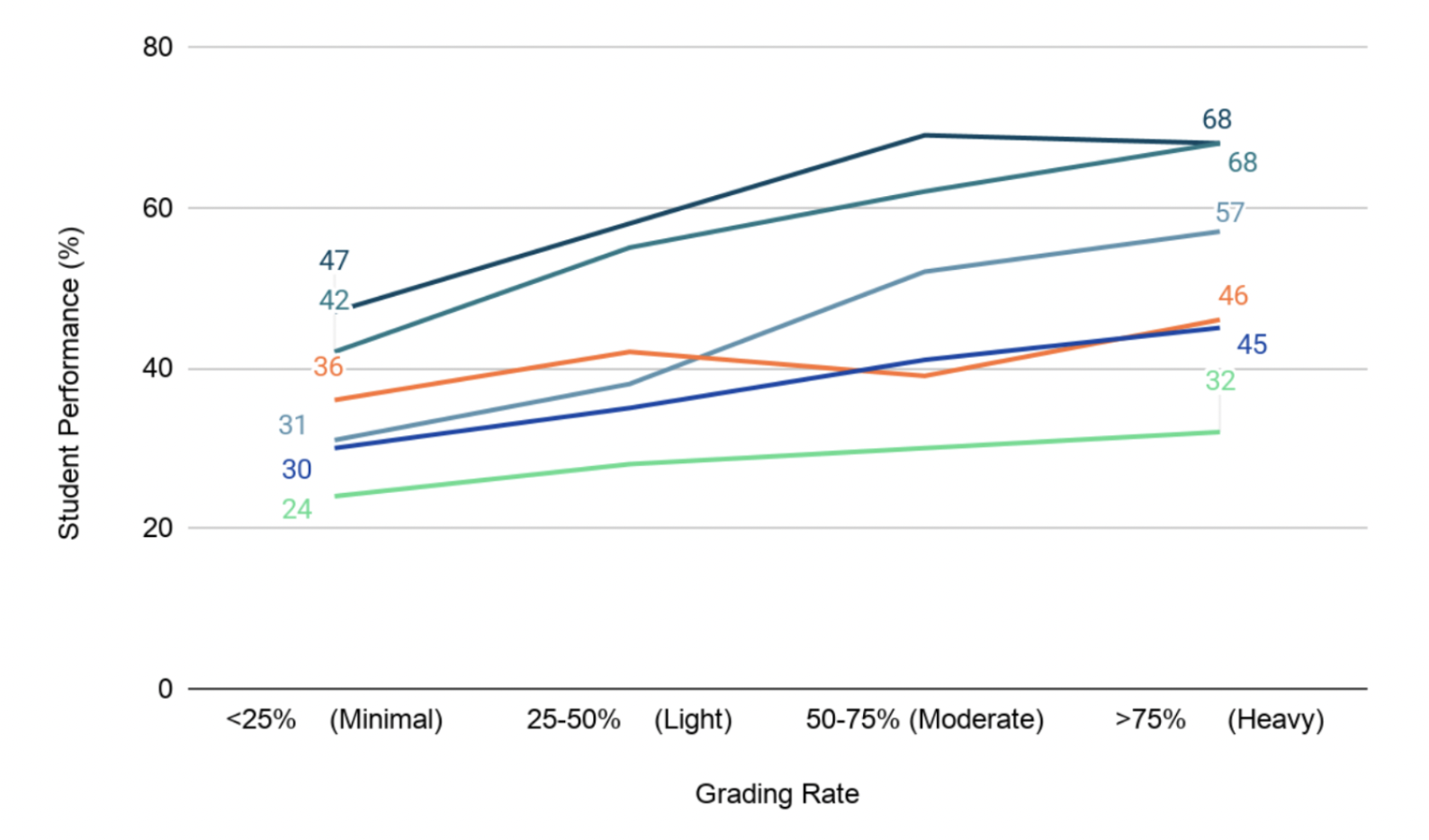
Students whose teachers graded more than 75% of assignments outperformed students whose teachers graded fewer than 25% of assignments by 8% to 26%, with multiple districts showing highly statistically significant results (p < .001). The consistency of this pattern across districts suggests that frequent grading may be an indicator of a broader instructional cycle in which teachers continuously monitor learning and respond to student needs.
What We Are Seeing Across Virginia
Across Virginia districts, student performance increased as grading rates increased. Students taught by teachers with minimal grading activity consistently demonstrated the lowest performance levels, while students taught by teachers with higher grading rates demonstrated stronger outcomes. This pattern suggests that frequent grading creates more opportunities to monitor learning, identify misconceptions, and respond with timely instructional support.
The Signal Is Bigger Than Grading Alone
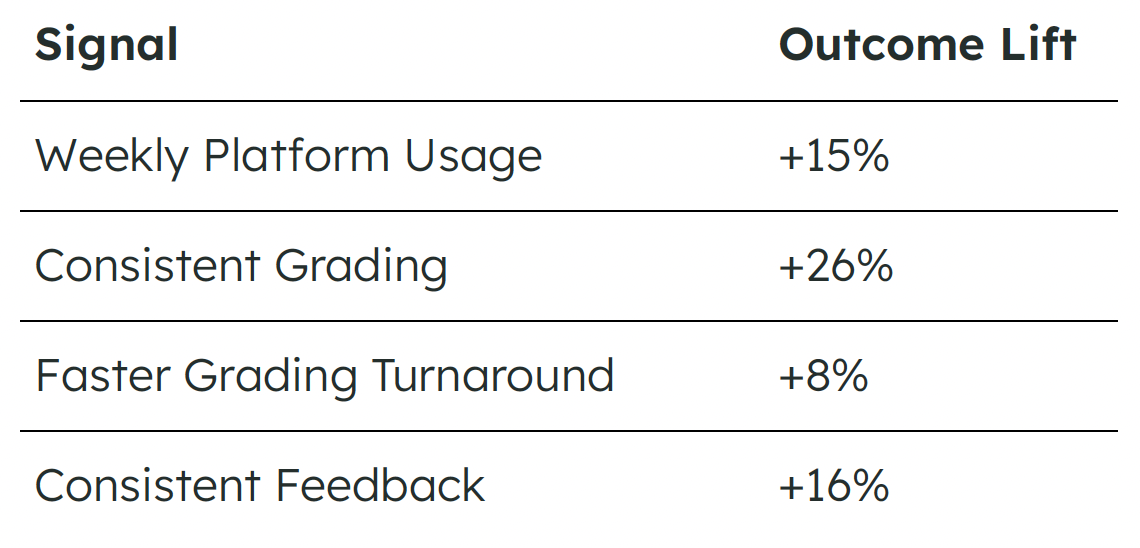
Across Virginia districts, stronger student outcomes were also associated with more consistent feedback, faster grading turnaround, and more frequent platform usage. Outcome differences ranged from 8 to 16% across these implementation behaviors.
Why this matters
Across districts, the strongest student outcomes were consistently associated with teachers who regularly engaged with student work through grading, feedback, and instructional data. Most importantly, these insights were identified while learning was still happening, providing district leaders with actionable evidence about the practices most closely associated with student success.
Success stories