

Texas Impact

When Instructional Response Speeds Up, Student Math Performance Rises
What We're Seeing Across Texas.
Across two Texas districts, a consistent pattern emerged. Students performed better when teachers reduced the time between assigning work, reviewing it, and providing feedback. Whether the district was large or small, the same signal appeared: faster instructional response was associated with stronger student outcomes.
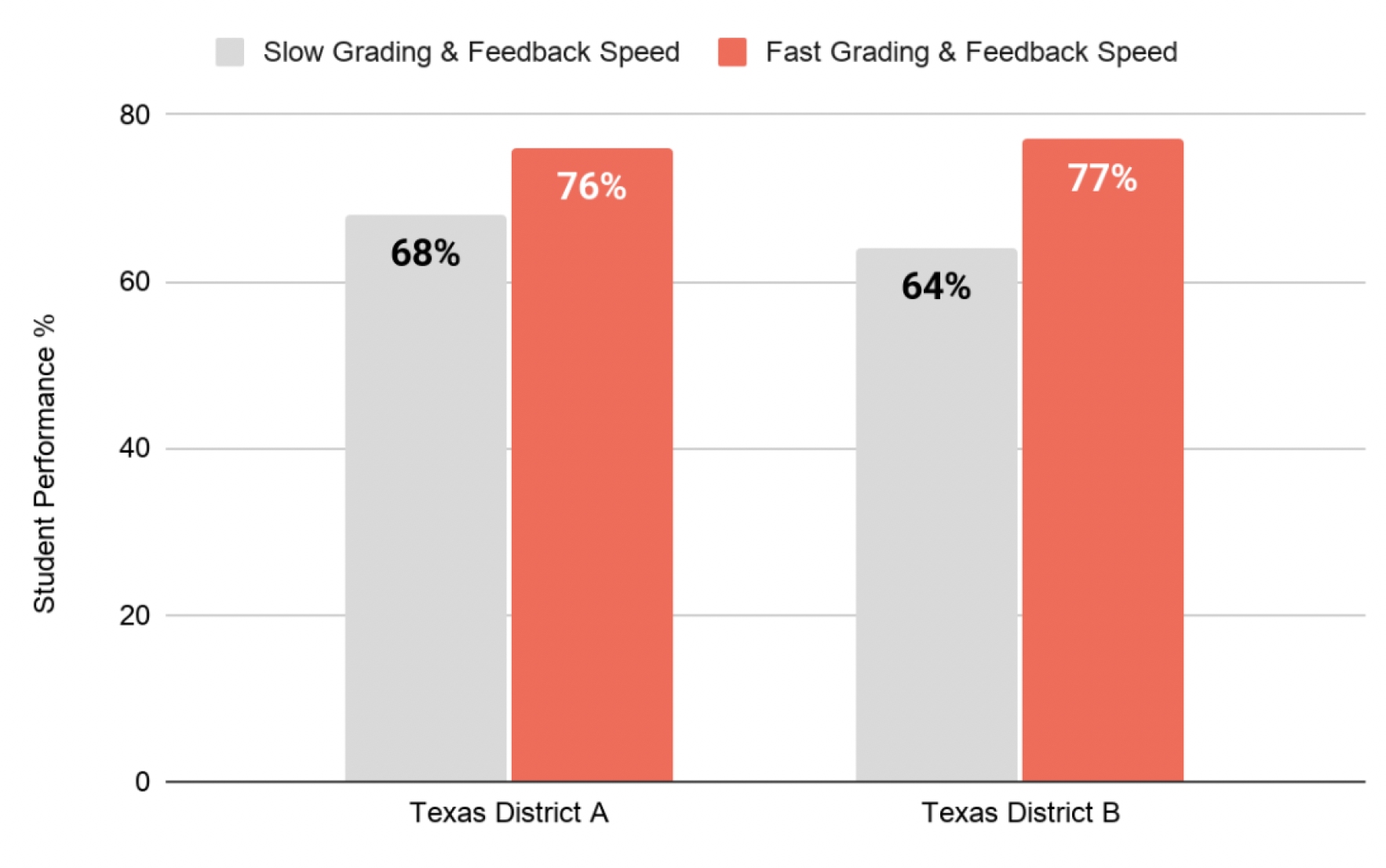
Students whose teachers graded and gave feedback in 3 days or less outperformed students whose teachers graded and gave feedback in 7 or more days by 8% to 13%, with both districts showing highly statistically significant results (p < .001). The consistency of this finding matters. Impact signals detected independently across multiple districts are often the first indication that a practice is not isolated to a single implementation or context. In Texas, that signal was clear.
The Signal Was Consistent Across Districts
Across both Texa s districts, the strongest impact signal was the combination of grading speed and feedback speed. Students whose teachers graded assignments and provided feedback within three days outperformed peers whose teachers took seven or more days by 8% in Texas District A and 13% in Texas District B.

The significance is not any single district result. It is that the same pattern emerged independently across both districts. When teachers shortened the time between student work and instructional response, student performance improved.
Speed Creates Opportunity
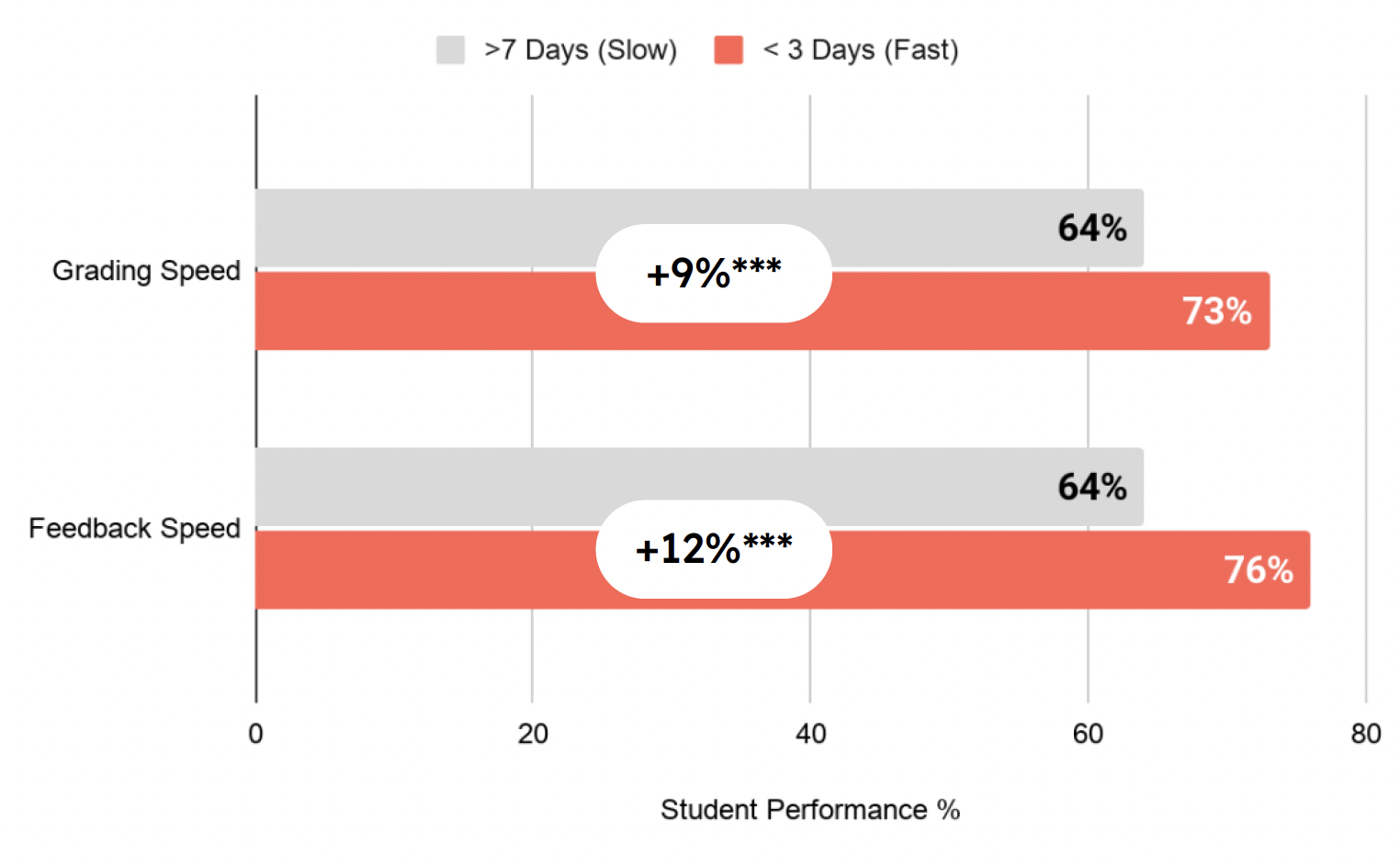
The combined signal was supported by individual analyses of grading and feedback speed. In Texas District B, students whose teachers graded within three days outperformed peers by 9.3%, while students who received feedback within three days outperformed peers by 12%.
Why This Matters
Many implementation reports focus on whether a tool was used. These findings reveal something more valuable: which educator actions are associated with stronger student outcomes.
Across Texas, one signal emerged consistently. When teachers shortened the time between student work and instructional response, student performance improved.
Success stories