


Inside Five Kiddom IM® v.360 Lesson Activities

Every lesson in the curriculum has a middle, and the middle is where students do the mathematics. Here are five of those activities, one from each grade band, drawn straight out of the courses teachers are teaching this year.
Kiddom logo
Kiddom
September 18, 2026
Five Kiddom IM v.360 Activities

Where the activity sits

A Kiddom IM® v.360 lesson runs the same way in kindergarten and in Algebra 2. A warm-up opens the thinking. One to three activities carry the mathematics. A lesson synthesis names what was learned. A cool-down, five minutes at the end, shows you who got there and who did not. Atlas reads those cool-downs overnight and turns them into next steps inside the same curriculum, so you are not working that out from scratch the next morning.

The activities are the part of the lesson students remember. They are also the part that asks the most of you, because each one arrives as three pieces rather than one: a launch that sets up the task, the student task itself, and an activity synthesis you run as a discussion. Kiddom keeps all of it in one place, along with the learning goals, the lesson narrative, the instructional routine, the materials list, and the timeline below.

  1. Warm-up10 minNumber Talk: 5 Ones
  2. Activity 120 minMake Quarters and Halves
  3. Activity 215 minMake Equal-Size Pieces
  4. Synthesis10 minLesson Synthesis
  5. Cool-down5 minPaint a Picture

60 minutes

Example Lesson Timeline as it appears in Kiddom IM® v.360, Grade 2, Unit 6, Lesson 8.

Practice Problems come after the lesson. Section checkpoints and end-of-unit assessments sit above it. Everything else in the structure exists to make the activity land.

Five activities, and what each one is really asking

These are example activities, one per band, chosen to give a sense of what the conceptual and procedural learning experience is like in Kiddom IM® v.360. The figures are redrawn for the page.

Pick a band, or scroll on for all five.

Grade 2 · Unit 6 · Lesson 8: Are All Pieces Created Equal?

Make Quarters and Halves

  • Activity 1
  • 20 min
  • Partners
  • 2.G.A.3
Lin partitions this square into quarters. She starts by splitting the square into halves. After she draws the first line, she tries 3 different ways to make fourths. Student task statement, Grade 2 Unit 6 Lesson 8
A B C

All three squares have four parts. Only B has four equal parts, so only B shows fourths. In the curriculum’s own words: “The other 2 shapes show 4 pieces, but they are not equal.”

The move.Students look at Lin’s three attempts and decide which one worked. Then they partition their own shapes, answer questions about the pieces, and compare with a partner. Activity 2 does the same work with thirds, using a circle and a rectangle.

Why it works.Four parts and four fourths are not the same claim, and a seven-year-old will not notice the difference until someone puts three wrong answers next to one right one. That is the whole activity. The standard says it out loud: equal shares of identical wholes need not have the same shape.

And then the cool-down, five minutes.

Andre Noah

Same size paper. Andre says he painted more than Noah. Do you agree?

No. Both painted half of the page, because each page is split into two equal parts and the pages are the same size. Different shape, same share. One question, and you know tomorrow morning who has it.

Grade 3 · Unit 7 · Lesson 14: Wax Prints

Create a Wax Print Pattern

  • Activity 1
  • 20 min
  • Notice and Wonder
  • 3.G.A.1
  • 3.MD.D.8
  • Rhombus
  • Square, so also a rectangle
  • A quadrilateral in none of those groups

A print built to the activity’s rule. Redrawn for this page. Students design their own on square dot paper with colored pencils.

The move.The lesson opens on a photograph of African wax prints, the cotton fabrics worn across West Africa, with two prompts and nothing else: what do you notice, what do you wonder. Students find the shapes themselves. Then they design a print of their own, and the design has one rule. It must include a rhombus, a rectangle, or a square, and a quadrilateral that belongs to none of those groups.

Why it works.That second requirement is the standard, word for word. 3.G.A.1 asks third graders to draw examples of quadrilaterals that do not belong to any of the named subcategories. A shape with four sides and no other claim to fame is easy to draw and hard to name, which is exactly what makes the category system visible.

The cool-down asks students to describe the quadrilaterals in a given pattern, then gives the print a size: 9 inches by 6 inches. Perimeter, 30 inches. Geometry and measurement in the same five minutes.

Grade 6 · Unit 1 · Lesson 1: Tiling the Plane

More Red, Green, or Blue?

  • Activity 2
  • 25 min
  • Partners, one pattern each
  • 6.G.A.1
In your pattern, which shapes cover more of the plane: blue rhombuses, red trapezoids, or green triangles? Explain how you know. Student task statement, Grade 6 Unit 1 Lesson 1

A pattern-block tiling of the kind students analyze, drawn from the same three blocks. Students get tracing paper, graph paper, scissors, colored pencils and an index card, and they get to decide which of those is worth using.

The move.This is the second activity of the first lesson of sixth-grade mathematics. Partners split up: one takes Pattern A, one takes Pattern B. Each has to work out which color covers more of the plane, and then convince the other one.

Four to five minutes of quiet thinking first. The teacher is watching for who counts blocks and who compares them.

Why it works.Both patterns hold the same pieces: 56 green triangles, 32 blue rhombuses, 24 red trapezoids. Green is the most common color by a wide margin, and green covers the least. Red is the rarest, and red covers the most.

The trap is baked in. A student who counts pieces gets the wrong answer, and the curriculum tells the teacher exactly what to say when they do: ask them to test it.

What the counting misses.

  1. 56 green triangles56 triangle-units
  2. 32 blue rhombuses64 triangle-units
  3. 24 red trapezoids72 triangle-units

One rhombus covers two triangles. One trapezoid covers three. That is the reasoning the activity is built to produce, and students produce it before the word area is ever used. It arrives in the cool-down, as a question: “Think about your work today, and write your best definition of ‘area.’”

Algebra 1 · Unit 7 · Lesson 3: Building Quadratic Functions from Geometric Patterns

Expanding Squares

  • Activity 2
  • 10 min
  • Collect and Display
  • HSF-BF.A.1.a
?Step 15 squaresStep 28 squaresStep 313 squaresStep 4
  • The square that grows
  • Four corners that never do

Steps 1, 2 and 3 are given. Students sketch what comes next, then jump to Step 18 without drawing it.

The move.Three steps, then four questions in a row that keep raising the stakes. Sketch the figure at Step 5. Count the squares at Step 18. Write an equation relating the step number to the number of squares, and be ready to say how each part of your equation shows up in the picture.

Then the direction reverses. Here is an equation. Sketch the first three steps of a pattern it could describe.

Why it works.Step 1 has 5 squares, Step 2 has 8, Step 3 has 13. The jumps are 3, then 5, so it is not linear, and a table alone will not tell you why. The picture will. There is an n by n square, and there are four corners that are always four.

y = n2 the square + 4 the corners

Step 18: 324 + 4 = 328 squares, and nobody draws it.

Geometry · Unit 1 · Lesson 2: Constructing Patterns

Make Your Own

  • Activity 2
  • 10 min
  • Construct It
  • HSG-CO.D.12
Use straightedge and compass moves to build your own pattern using the circle and radius as a place to start. Use precise vocabulary so someone can make a perfect copy without seeing the original. Student task statement, Geometry Unit 1 Lesson 2
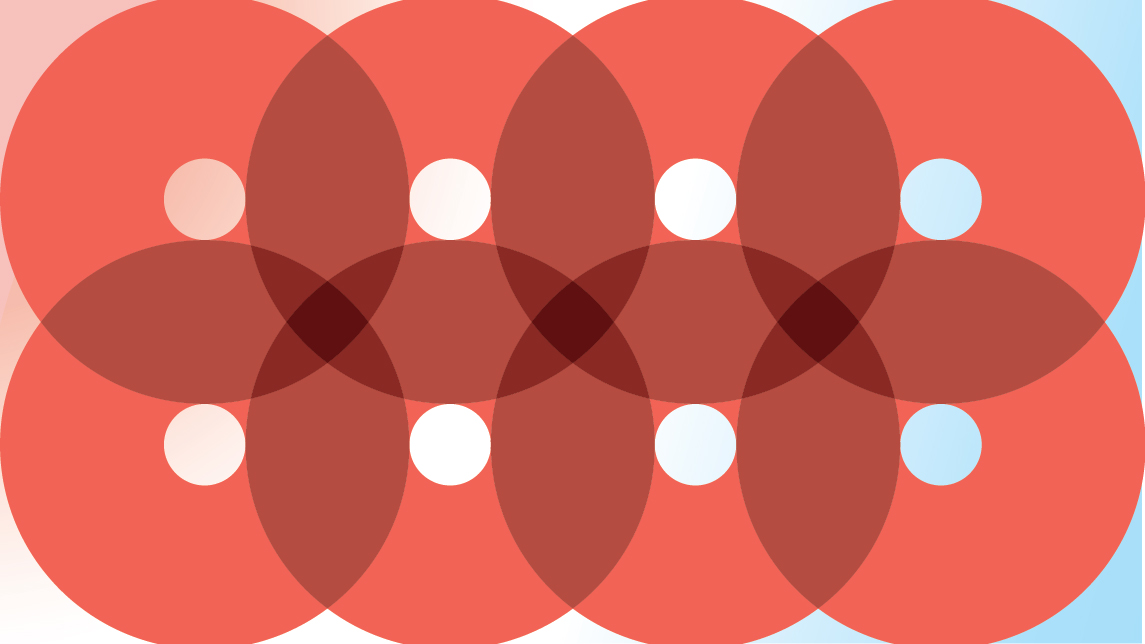
ABCDEFO

The pattern, written down.

  1. Create a circle centered at O with radius OA.
  2. Create a circle centered at A with radius OA. Label its intersections with circle O as B and F.
  3. Create a circle centered at B with radius OA. Label its new intersection with circle O as C.
  4. Repeat with C, D and E until six circles surround circle O.
  5. Shade each region where two neighboring circles overlap.

Seven circles, one radius, no measuring. The curriculum shows students two sample patterns built this way and tells them they do not have to stop there.

The move.Build a design with a compass and a straightedge. Record every move on a separate sheet as you go. Then trade sheets with a partner who has not seen your design, and build theirs from the writing alone.

In Kiddom, students upload a photo of the finished pattern and the recorded moves, so both halves of the work land in one place.

Why it works.The drawing is not the assignment. The writing is. When a partner’s copy comes out wrong, the instructions were wrong, and that is a far better lesson in precision than any worksheet on vocabulary.

The synthesis asks one question: what could have been more precise? The cool-down gives them the chance. “Rewrite the instructions for your design to be more clear and precise.” Students who finish early get pointed toward the geometric patterns in mosques and madrasahs, built from these same moves for a thousand years.

None of them start with the definition

Second graders argue about Lin’s three squares before the word fourths is settled. Sixth graders compare colored tiles for 25 minutes before anyone writes down area. Geometry students build the rosette before they are told what a formal construction is. Third graders find the shapes in a photograph of fabric before a single shape gets named.

That order is deliberate, and it holds across all thirteen courses. The activity comes first. The vocabulary arrives to name what students already did. Which is also why the activity is the part worth protecting when the period runs short, and the part worth preparing when you have ten minutes the night before.

Request a demo